- News
Better than One in a Million – how inconsistent approaches to cleaning up pollution cost us new housing.
This blog is part of a series that illustrates common challenges in cleaning up pollution in our communities and safely reusing land. Prosperity California will be hosting a session at the California Land Recycling Conference to explore how we can accelerate redevelopment of brownfields: underused land—often prime for new housing—that has been contaminated by previous industrial, commercial, or military activity.
Join us at the conference or get in touch to help map the strategic reforms we need in California to create healthy, vibrant communities on vacant and underutilized land!

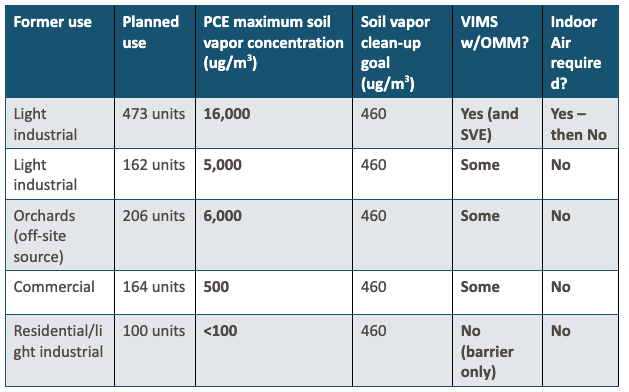
Gina Plantz, a Senior Principal and Technical Expert with Haley & Aldrich, has decades of experience evaluating and cleaning up land that was contaminated by prior uses. Recently, she led the evaluation and remediation of five sites impacted by Tetrachloroethylene (PCE), with the goal of redeveloping them into a total of 1,105 new homes. PCE is a chemical used as a solvent in dry cleaning and metal degreasing. While all the sites had the same clean-up goal (would be cleaned-up to the same tested standard), each one was treated differently by regulators. The mitigation measures required seem more tied to the contamination found at the beginning of the investigation, rather than the clean-up achieved. This inconsistent and not technically sound approach, puts up barriers for developers who engage in more ambitious clean-up projects in our communities and the building of needed homes.
Vapor Intrusion: the risk, the debate, and contested science.
One issue that has been hotly debated in recent years is the risk posed by vapors rising through soil and potentially into new buildings built on cleaned-up land, known as vapor intrusion. This was the issue for all the sites Gina was leading on. The risk of anyone having an increased chance of getting sick in a new development because the land was previously contaminated needs to be very low, like one in a million – which is what screening levels are based on. The presence of a chemical at concentrations exceeding current screening standards does not necessarily indicate adverse effects on human health or the environment; just that more information should be gathered. There are a number of factors that determine this risk that vary by the contamination present in the soil, environmental conditions, and importantly, the assumptions made about how any vapor will travel through soil and into buildings.
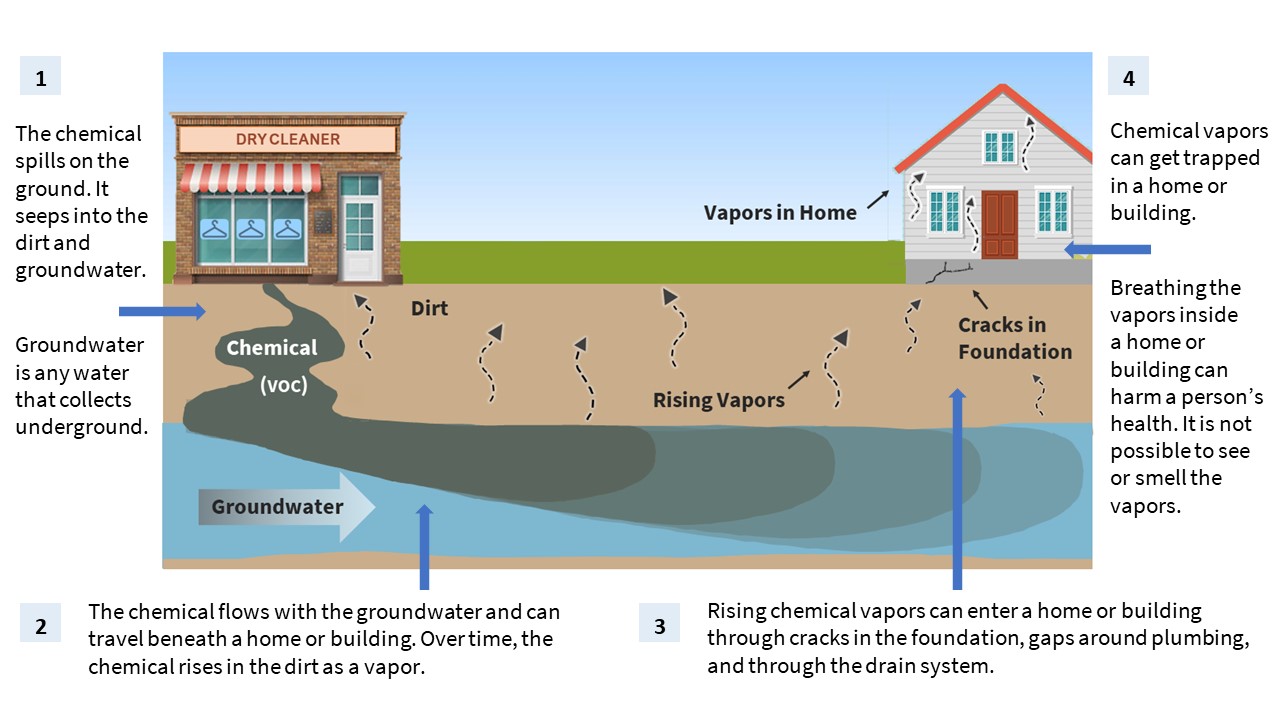
A visual representation of common vapor intrusion pathways from the California Department of Public Health.
In 2020, the California EPA changed their vapor intrusion guidance to a highly debated and much stricter standard, causing many more projects to need to install expensive vapor intrusion mitigation systems and conduct ongoing monitoring and maintenance, often for years. If a project was mid-development when this new guidance was issued, like the Mirasol project we featured earlier this summer, they were required to re-evaluate their building plans and include vapor intrusion systems on the building that weren’t yet completed. Finding funding for this new expense mid-project delayed completion of these new affordable homes by years.
Affordable housing advocates and environmental experts have contested the science used in this new guidance to evaluate the risk that vapors will move through soil into buildings above. Both by conducting studies that show lower rates of risk, which are actually consistent with the previous California guidance, and demonstrating that new buildings generally offer more risk reduction than existing homes. However, these well known studies and facts are many times not being considered by regulators, which is leading to inconsistent and many times overly conservative and costly approaches for new housing projects.
As an example, the data below is from the five sites where Gina was leading the evaluation and remediation of PCE. While all the sites had the same clean-up goal , they are required to install or adhere to different vapor intrusion mitigation systems (VIMS), ongoing maintenance and monitoring (OMM), or soil vapor extraction (SVE).
New housing is being held to higher and often unachievable standards that are inconsistently applied. The uncertainty around requirements and added expense discourages clean-up and redevelopment of some of the most available places for new housing, like closed dry cleaners and gas stations, and failing industrial or commercial corridors that are present in so many of California’s cities. By passing strategic reforms that make the process and standards more predictable and evidence-based, we can safely accelerate clean-up and deliver new housing where we need it most, improve health outcomes by removing pollution, and create vibrant, inclusive spaces in formerly failing areas.