
Escaping Limbo: after 7 years, these 75 affordable homes in Salinas have yet to break ground.
- Written by Robyn Leslie
- 6 minute read
This blog is part of a series that illustrates common challenges in cleaning up pollution in our communities and safely reusing land. Prosperity California will be hosting a session at the California Land Recycling Conference to explore how we can accelerate redevelopment of brownfields: underused land—often prime for new housing—that has been contaminated by previous industrial, commercial, or military activity.
Join us at the conference or get in touch to help map the strategic reforms we need in California to create healthy, vibrant communities on vacant and underutilized land!

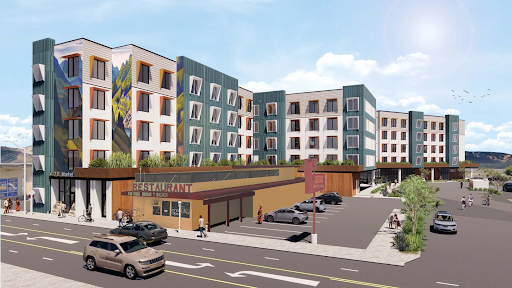
Serena Collins and New Way Homes are leading the development of 75 deed restricted affordable homes, a food business incubator, and women’s small business center. These are all things the community needs and wants, but they’ve been in planning stages for over seven years. Why? Before they build, New Way Homes has to clean up contamination left in the ground by an autorepair shop.
New Way Homes is a 501(c)(3) supporting mission-driven housing projects focused on solving California’s growing housing crisis, maximizing social impact, community engagement, and sustainability. They got connected to this site in 2018 and best case scenario, New Way Homes will be able to restart (yes restart) cleaning up the site in April, 2026, seven years after their first environmental assessment was complete. This is not the fault of bad actors, but an unfortunate combination of regulation and funding timelines not matching, harsh realities of limited and decreasing grant funding to help cover the cost of clean-up for affordable housing, and the opaque and complicated nature of navigating environmental remediation that requires everything to go right and ton of expertise.
Project Timeline:
- 2018 – New Way Homes (NWH) conducts a Phase 1 Site Assessment
- 2020 – NWH competes Phase 2 Site Assessment, clean-up plan is approved by the Regional Water Board
- 2021 – Funding available through DTSC, NWH applies.
- 2022 – Funding awarded to NWH through DTSC
- 2022-2023 – NWH needs to resolve NEPA challenges before using funding for clean-up or they risk never qualifying for federal public subsidies for their low-income housing project.
- 2023 – NWH begins clean-up
- 2023-2024 – Winter moratorium forces clean-up to halt. Cost of clean-up increases.
- 2025 – NWH is awarded additional grant funding for clean-up and is required to do additional testing by the Regional Water Board throughout the summer.
- 2025-2026 – Winter moratorium will force NWH to delay clean-up until 2026.
If you’re building infill, you’re checking for contamination. Almost everyone who is building on land that had previous uses conducts what’s called a Phase 1 site assessment. It’s a basic look at any contamination that might be present that could endanger future residents or people using the site. It’s also a critical step to protect yourself as a landowner from being held liable for pollution on the site that wasn’t your fault. New Way Homes conducted a Phase 1 in 2018 and found contaminants in the soil at potentially unsafe levels. This means they moved on to a deeper investigation, a Phase 2 assessment, right away.
What they didn’t know is that the Water Board was going to require testing in wet and dry seasons, over a two year period. At a minimum. They got a clean-up plan approved in Summer 2020 but it was expensive. New Way Homes typically uses an impact investing model and private funding to build their affordable housing. Unfortunately, the cost of construction had increased so much as the years went by they realized that in addition to a grant to cover site clean-up costs, they would need to seek federal funds for the project. Even though they had an approved clean-up plan from state regulators and years of testing data, if they started clean-up without a full National Environmental Protection Act (NEPA) review they would risk never being able to receive federal public subsidies. Resolving this issue took the rest of 2022 and part of 2023.
Serena applied for permits to start removing pollution, but the process took so long that they barely got started before the city told her to stop all work for the winter moratorium on moving soil on October 15. The rainy (or winter) season is defined by the state as October 15-April 15, but each local government has the ability to define their own regulations as weather conditions aren’t uniform across the state of California. The City of Santa Cruz, just north of Salinas, allows grading during the rainy season if the slope is less than 10%. They receive 26-42 inches of rain a year. The Salinas site is flat and the City of Salinas receives an average of 10-15 inches in a generous year of rain. Without their own city-specific ordinance, Salinas defaults to the state standard.
The winter moratorium would lift in April 2024, but the projected cost for clean-up had increased to over $1M and they needed to raise additional funds. The program they got the initial tranche of funding from was eliminated in state budget negotiations. Their project sat inactive for over a year because they couldn’t responsibly expend the funds for the increased cost of clean-up, a common issue for affordable housing developers who aren’t able to raise rents to cover costs.
Finally in December 2024, additional funding for clean-up became available through DTSC. In June 2025, NWH was awarded additional funding for clean-up, and they started the 2 more rounds of testing required by the Water Board and might be able to finish their second round of data reporting by early fall. Given they’ll be staring down the October 15 winter moratorium, Serena will have to wait to restart clean-up until April 2026. Leveraging the funding they have, they might be able to complete the clean-up they started in 2022, by October 2026.
Salinas needs this project, it will improve people’s lives. New Way Homes is ready to deliver it, but they’ve been slowed down by poor grant timing, and a winter moratorium for a rainy season that just isn’t that rainy in Salinas. We can and must accelerate the clean-up process to do better for our communities.
Join New Way Homes and Prosperity California at the California Land Recycling Conference in September to learn how we can mobilize our communities to support reform!