
- News
Double Jeopardy – 5 years of repeat reviews for a 4-day job.
This blog is part of a series that illustrates common challenges in cleaning up pollution in our communities and safely reusing land. Prosperity California will be hosting a session at the California Land Recycling Conference to explore how we can accelerate redevelopment of brownfields: underused land—often prime for new housing—that has been contaminated by previous industrial, commercial, or military activity.
Join us at the conference or get in touch to help map the strategic reforms we need in California to create healthy, vibrant communities on vacant and underutilized land!
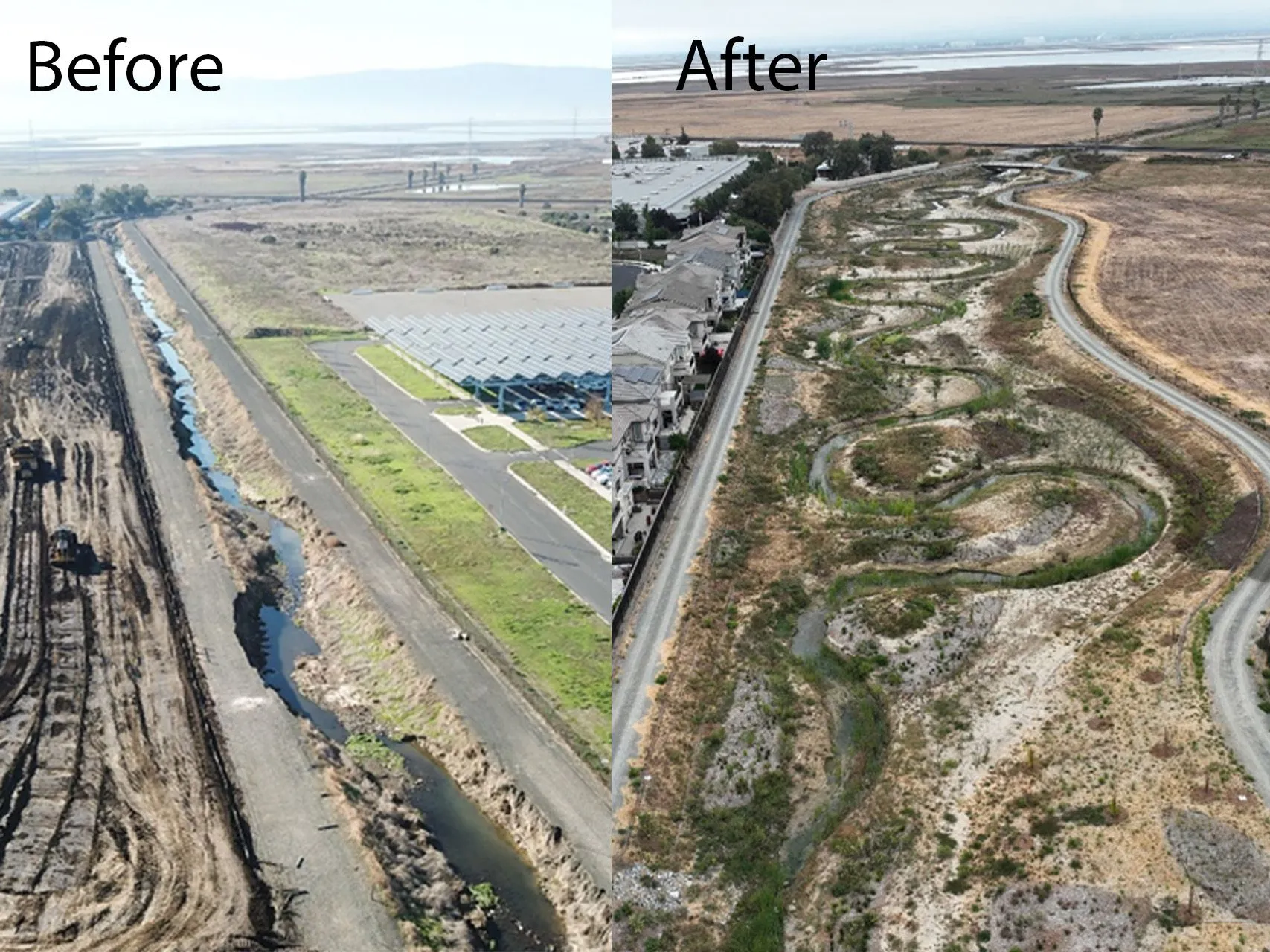
ENGEO, an award winning firm of environmental scientists and engineers, managed the clean-up of former agricultural land to construct a regional flood protection project adjacent to Ohlone College in the East Bay. ENGEO’s scope focused on the evaluation and removal of soil that had been contaminated with pesticides during past agricultural activity at the site, a job that would take all of four field days to complete. It took five years to get the work approved due to multiple staffing changes and associated repeat reviews. When simple projects with big public benefits face this kind of double jeopardy, we keep our communities polluted and increase costs and timelines to deliver needed housing and infrastructure.
The project incorporates a meander design that slows the flow of flood waters and improves water quality before it drains into the Don Edwards San Francisco Bay National Wildlife Refuge. The College also plans to build 532 homes for students and faculty on 5.2 acres of former ranch land that is a part of their campus and near this project.

In 2020, ENGEO evaluated approximately 1.6 acres of land for the flood control project, which was subject to a land use covenant that had been recorded during a previous clean-up. The covenant detailed the past mitigation activity and what land uses would be allowed in the future to ensure public and environmental safety. In 2021, ENGEO prepared a workplan to safely address contamination within the proposed flood control system footprint, which once completed would remove the covenant restrictions and allow for construction of flood improvements. Conversations were going well with regulators until the first staffing change.
In total, ENGEO worked with three regulatory agency supervisors and four different case officers on this one soil grading project. With each staffing transition, the goal posts for clean-up moved, and ENGEO was forced to respond to new comments on plans that had already been fully reviewed. The delays associated with the staffing changes and a repetitive review process nearly imperiled grants that had been awarded for this public work.
Eventually, the remediation workplan was approved in Spring 2023 and they were finally allowed to get in the ground! They completed the soil excavation in four days, but that did not mean the saga was over. Every clean-up needs a project completion approval. After another two years of protracted review, including more staffing changes, the completion report was finally approved in March 2025.
As housing prices have risen across California, the need for student housing has become more pressing. A quarter of community college students in California experience homelessness, more than double the rate of CSU students and almost triple the rate of UC students. Redeveloping this vacant, former agricultural land into housing is a creative approach to address this crisis. This project not only made existing and proposed housing safer and aesthetically more attractive, but also provided valuable flood protections for the region. It cannot take five years for a simple project with big public benefits to be approved. It will keep our communities polluted and reduce the opportunities for public institutions like Ohlone College to use their land to support the education and vitality of our communities.